“There’s great value to knitting or digging up your garden or chopping up vegetables for soup, because you’re taking some time away from turning the pages, answering your emails, talking to people on the phone, and you’re letting your brain process whatever is stuck up in there.” —
Chellie Pingree
The World of Yarn
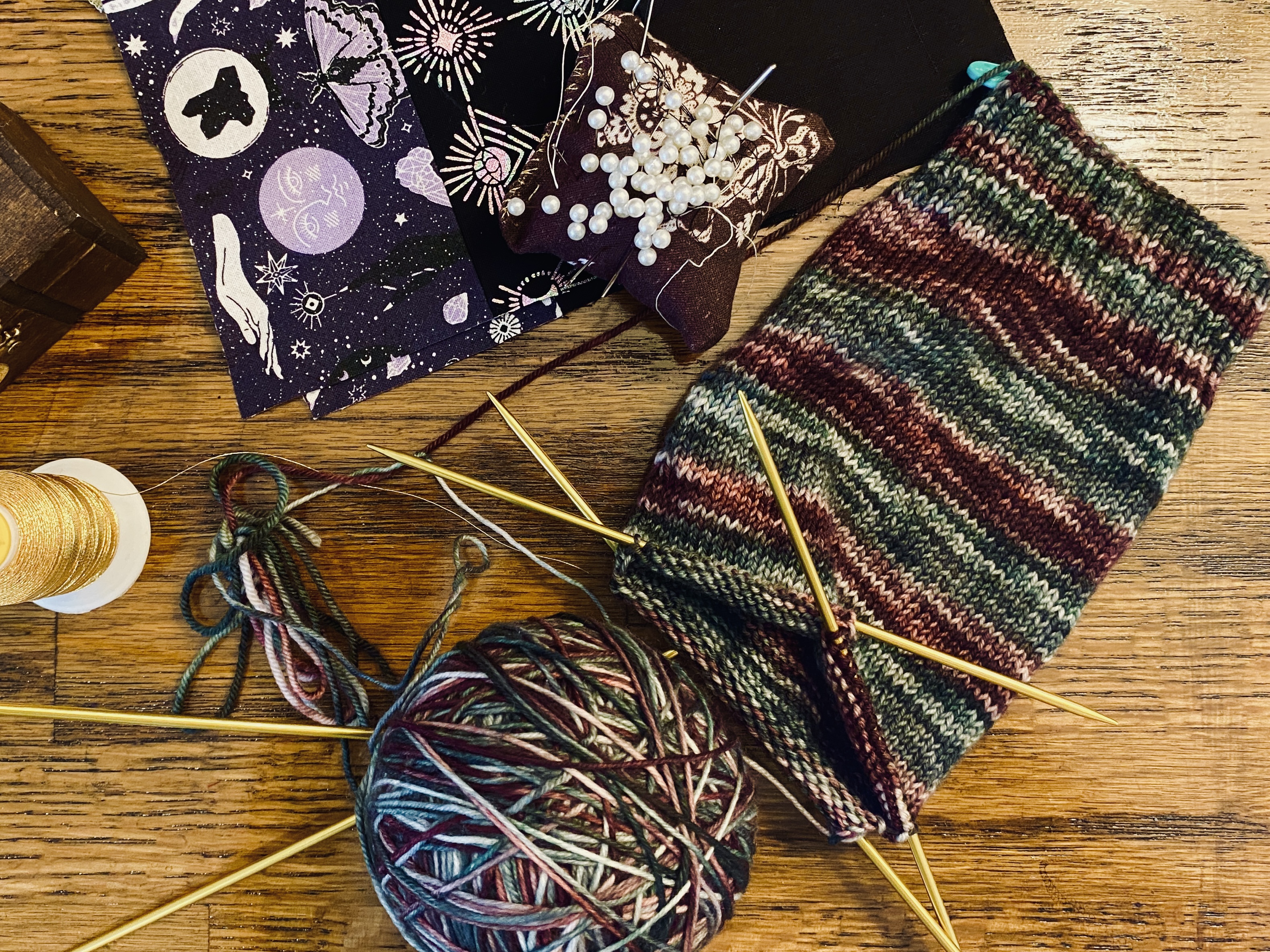
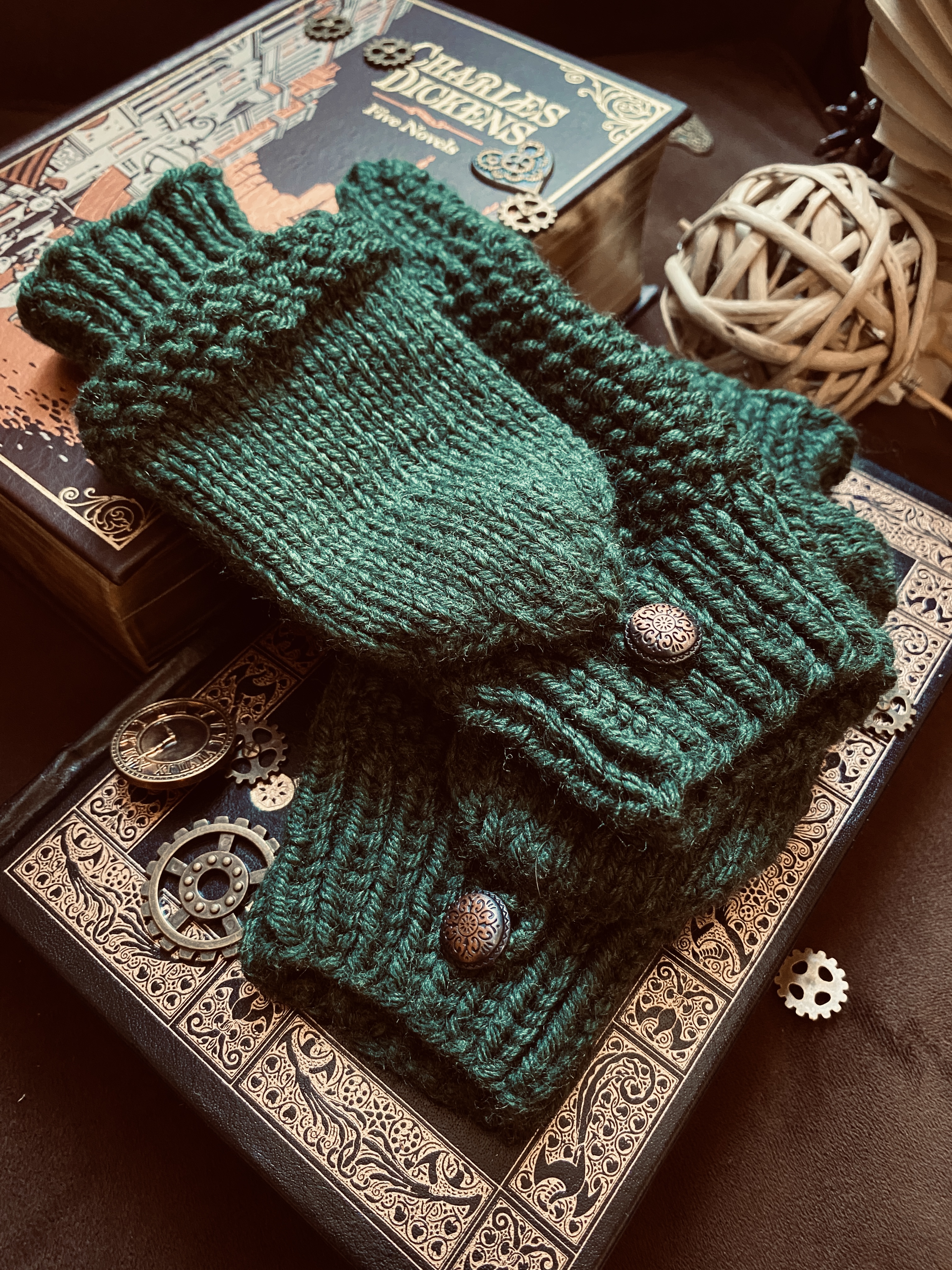
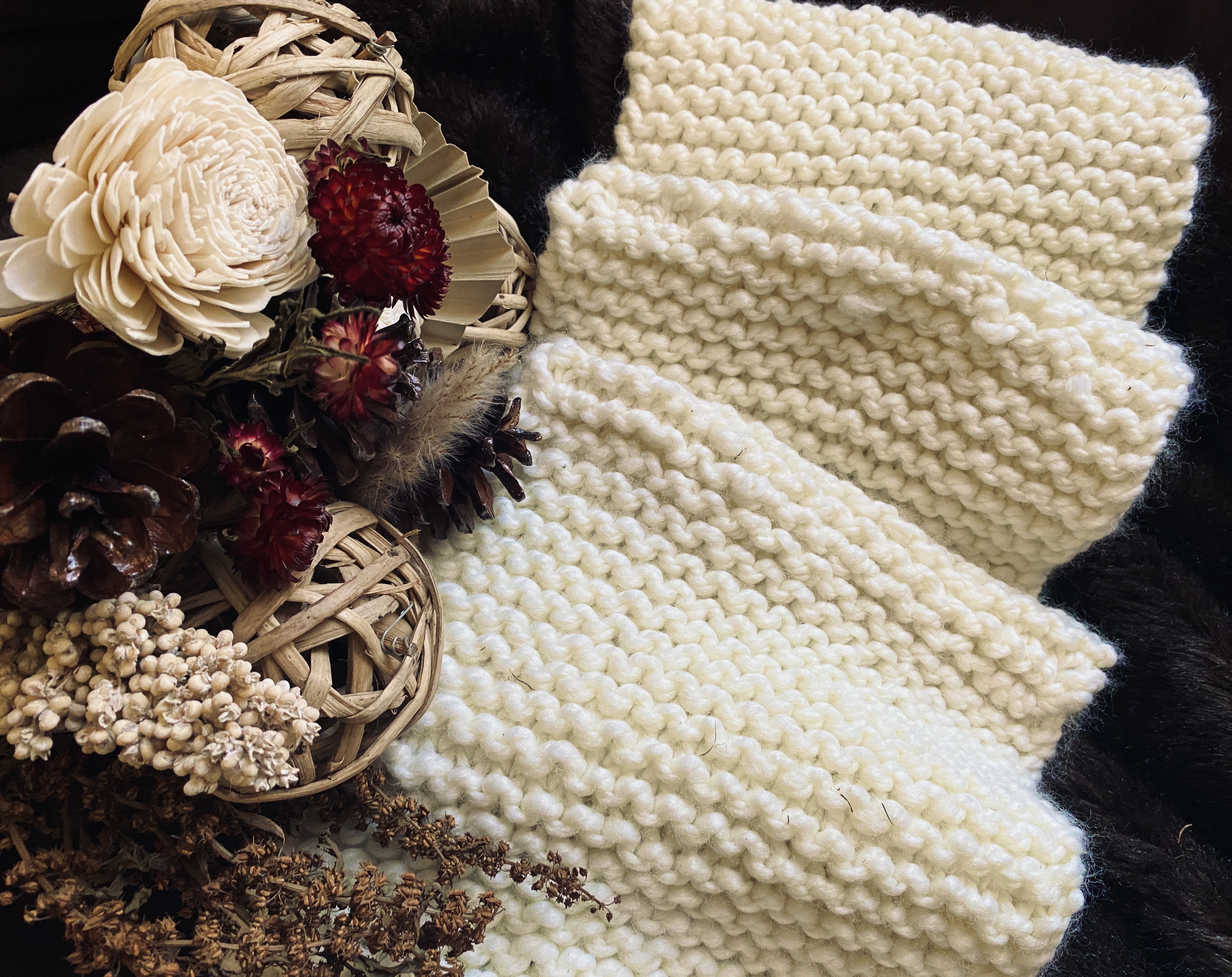
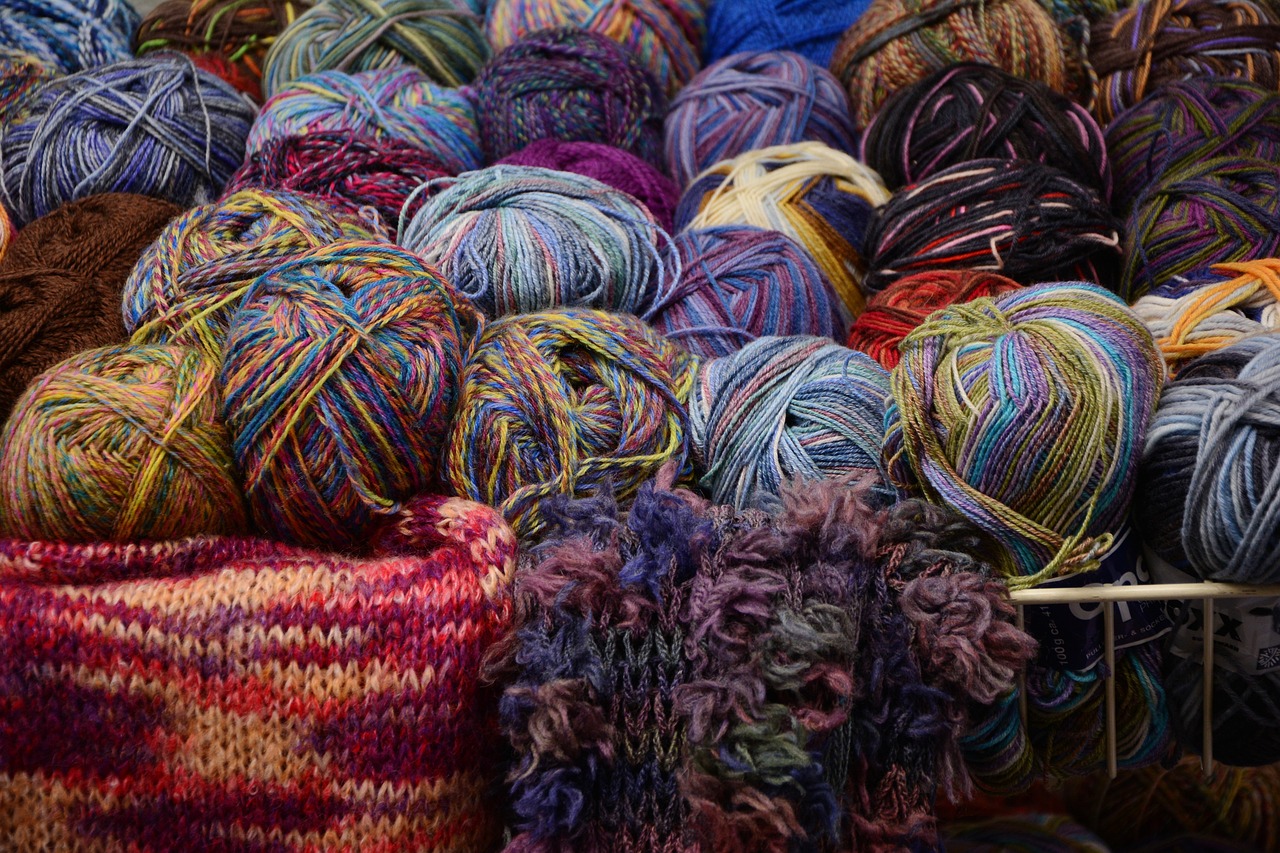
When I first started knitting, I used this chunky, textured, and heathered forest green yarn called Lion Brand Homespun. It was definitely not the best yarn to learn on, but it was all I had at the time from my mom’s stash while I was a broke college student. My mom was going to make a scarf for me out of it, but she lost interest in the craft, so it was my turn to try to make the scarf. I ended up knitting a hat and a tangled scarf—neither of which I still own. At the time, I wished that there was a comprehensive guide that explained the importance of yarn weight, texture, and fiber content without having to overexplain to me the nuanced details.
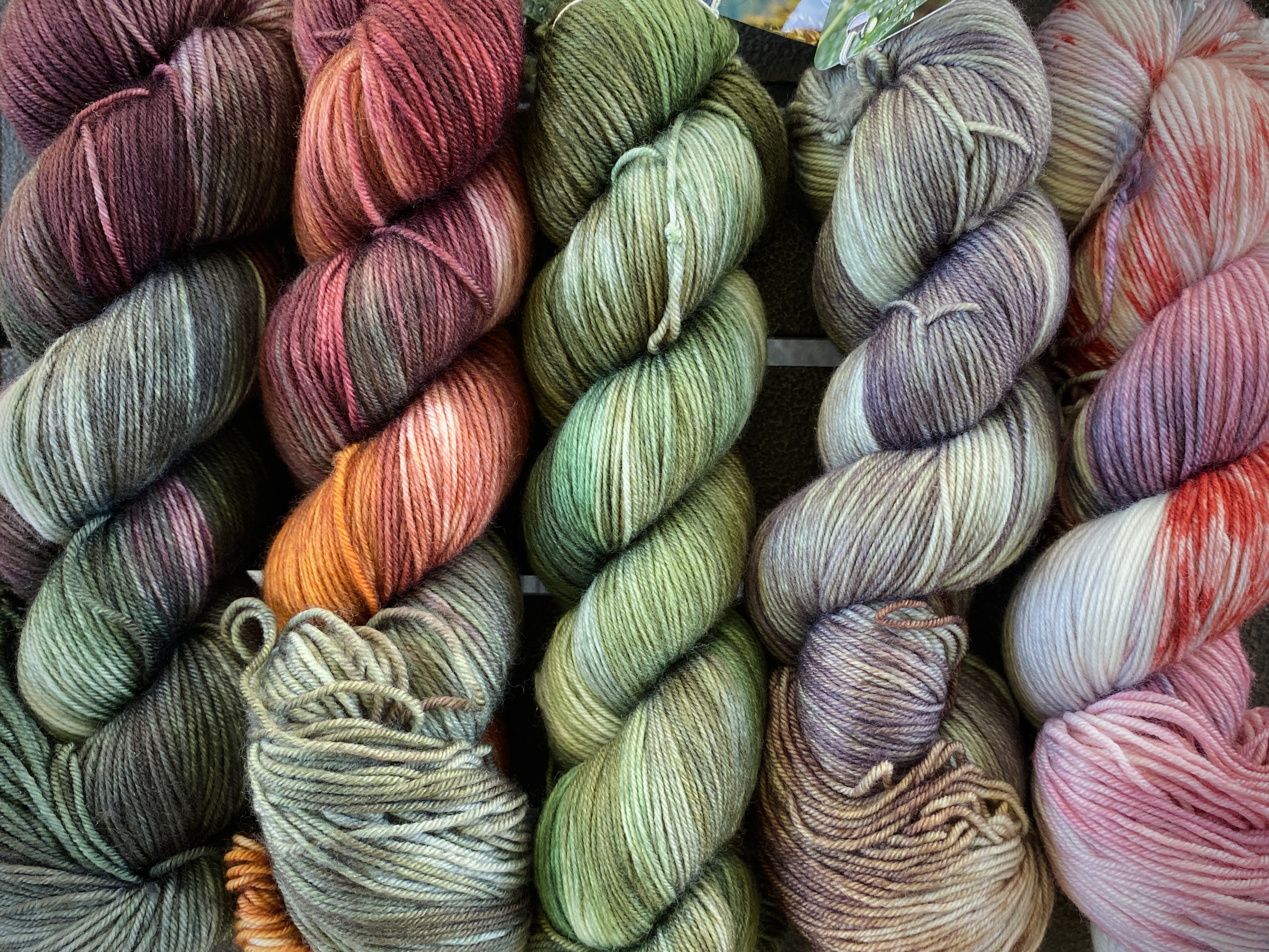
The world of yarn is vast, intense, and precise. It can get as simple as a standard acrylic yarn to a luxurious hand spun and hand painted work of art. However, if I had to explain to a beginner what I believe the most important factor about yarn is, I would definitely choose yarn weight. As beginners (and, let’s face it, veterans), we can be in awe when exploring a yarn shop or the yarn isle of our favorite box store. It is easy to be mesmerized by the colors and the textures, and the imagination runs wild with all sorts of possibilities. However, yarn weight will determine whether you will love the craft of knitting or crochet, or abhor it.
Yarn Weights
Yarn weight refers to the actual thickness of the yarn strand—not the literal weight of the skein or hank. The Craft Yarn Council has an Official Standard Yarn Weight System that lists the weight type, the needle or hook recommendation, and prospective gauge.

Knit and crochet patterns typically come with a gauge, which is the number of stitches and rows per inch of fabric. A yarn weight is recommended to obtain the gauge to ensure that the project is the correct size or fit when completed. Some knitters and crocheters will skip stitching a gauge test out of excitement for starting a project, but this is up there with sewers not create a mock-up for a sewing pattern. You run the risk of having the wrong tension for the project.
If a sweater pattern calls for a Number 4 category yarn and the yarn you have is a Number 2, you will not get the same results without extensive adjustments. Your garment will end up with extremely loose stitches and a smaller fit. Always test a gauge. Personally, I have never had a project go wrong if I tested a swatch for the gauge first.
Most patterns today use the Official Standard Yarn Weight System from the Craft Yarn Council (CYC). CYC is a nonprofit trade association for yarn manufacturers, industry consultants, and publishers. Their standard chart is extremely helpful for identifying yarn types.
0 – Lace: crochet thread, cobweb yarn, superfine thread.

The thinnest yarn, lace is often referred to as thread. It is best suited for delicate projects such as… lace! It also suits doilies and lightweight shawls. Some lace yarns (such as mohair lace) are used in conjunction with heavier yarns for added texture and color. Some examples include Berroco Aerial, Valley Yarns 2/14 Alpaca Silk, and Cascade Yarns Heritage 6.
- Gauge (Knitting): 8+ stitches per inch on 1.5–2.25 mm (US 000–1) needles.
- Gauge (Crochet): 32–40 stitches per 4 inches on steel crochet hook sizes 6–8 or 1.6–1.75 mm.
1 – Super Fine: sock yarn, fingering yarn, baby yarn.

Super fine yarn is lightweight and delicate, often used for baby items, socks, and fine shawls. This weight is excellent for socks, with self-striping and hand painted yarns being popular choices for unique sock colorways. Some examples include Knit Picks Stroll, Dream in Color Butterfly BFL, and Arcane Fiber Works.
- Gauge (Knitting): 7–8 stitches per inch on 2.25–3.25 mm (US 1–3) needles.
- Gauge (Crochet): 21–32 stitches per 4 inches on crochet hook sizes B-1 to E-4 (2.25–3.5 mm).
2 – Fine: sport yarn, baby yarn.

Sport weight yarn is lightweight yarn that is ideal for lightweight garments and accessories. The drape on sport weight yarn is attractive, resulting in luxurious feeling pieces. They might take some time to make, but the results are stunning with texture, color, and fit. Some examples are Knit Picks Wool of the Andes Sport, Malabrigo Caprino, and Valley Yarns Valley Superwash Sport.
- Gauge (Knitting): 5.75–6.5 stitches per inch on 3.25–3.75 mm (US 3–5) needles.
- Gauge (Crochet): 16–20 stitches per 4 inches on crochet hook sizes E-4 to 7 (3.5–4.5 mm).
3 – Light: DK (double knitting), light worsted yarn.

DK yarn is a versatile weight for garments, blankets, and accessories. It has more drape than worsted weight yarn, but still has structure and texture. Some examples are Berroco Ultra Alpaca Light, Kelbourne Woolens Scout, and Knit Picks Andean Treasure DK.
- Gauge (Knitting): 5.25–6 stitches per inch on 3.75–4.5 mm (US 5–7) needles.
- Gauge (Crochet): 12–17 stitches per 4 inches on crochet hook sizes 7 to I-9 (4.5–5.5 mm).
4 – Medium: worsted yarn, afghan yarn, aran yarn.

Worsted yarn is the most commonly used yarn weight, perfect for sweaters, scarves, blankets, hats, and amigurumi. Think of this weight as the “all-purpose” yarn weight—not too thin, and not too thick. Worsted weight warns can be stitched up comfortably within a reasonable number of hours. Some examples include Knit Picks Wool of the Andes Worsted, Loch Lomond GOTS, and Cascade Yarns 220.
- Gauge (Knitting): 4–5 stitches per inch on 4.5–5.5 mm (US 7–9) needles.
- Gauge (Crochet): 11–14 stitches per 4 inches on crochet hook sizes I-9 to K-10.5 (5.5–6.5 mm).
5 – Bulky: chunky yarn, craft yarn, rug yarn.

Bulky yarn is thicker yarn that works up quickly. It is often used for warm garments and accessories, but isn’t so bulky that the piece overpowers the body. Always check your gauge when using bulky yarn since the gauges can be sporadic. Some yarns claiming to be bulky actually fit the aran weight category. Some examples include Germantown Bulky, Knit Picks Swish Bulky, and Berroco Ultra Alpaca Chunky.
- Gauge (Knitting): 3–3.75 stitches per inch on 5.5–8 mm (US 9–11) needles.
- Gauge (Crochet): 8–11 stitches per 4 inches on crochet hook sizes K-10.5 to M-13 (6.5–9 mm).
6 – Super Bulky: super chunky yarn, roving.

Super Bulky yarn is extremely thick yarn that works up very fast. Ideal for cozy blankets, hats, and oversized projects. This is a popular choice for beginners that want to knit or crochet their first garment, or for anyone that gets bored easily and needs a yarn that knits up quickly to satisfy the need to be creative without requiring too much time. Some examples include Lion Brand Wool-Ease Thick & Quick Yarn, Wool and the Gang Crazy Sexy Wool, and Malabrigo Rasta.
- Gauge (Knitting): 2–2.75 stitches per inch on 8–12.75 mm (US 11–17) needles.
- Gauge (Crochet): 7–9 stitches per 4 inches on crochet hook sizes M-13 to Q (9–15 mm).
7 – Jumbo: Roving, giant yarn.

The thickest yarn, giant yarn is often used for arm knitting or large-scale projects. They are wonderful for making arm blankets, which can be completed in just a few hours. Some examples include Bernat Blanket Big Yarn, LB Collection Yooge Yarn, and Tubular 40.5yds Jumbo Polyester Yarn by Big Twist.
- Gauge (Knitting): 0–1 stitches per inch on 12.75 mm (US 17) and larger needles.
- Gauge (Crochet): 6 stitches or fewer per 4 inches on crochet hook sizes Q and larger (15 mm+).
Which is the BEST Weight?
Your preference for yarn is going to be entirely up to you. It will depend on the type of projects you enjoy creating and the amount of time you wish to spend on a project. Personally, I fall under the common category with a preference for weight-4 worsted aran yarn. However, experiment with a variety and see which ones you like best.
 Cozy Crafting and Art
Leave a comment