“We think too much and feel too little.” ― Charlie Chaplin from The Great Dictator
Why Arts and Crafts ARE Activism
Oftentimes many see “craftivism” ―a form of civil disobedience and political protest that uses traditional domestic crafts to fuel societal change―as a Paper Tiger that produces few if any results, or as a form of virtue signaling without the necessary hard work of tangible action. Of course the simple act of knitting a hat is not going to bring about societal change. That said, the act of knitting a hat can be a gateway to true societal change by empowering the maker to branch out into other forms of activism.
Art (which includes domestic crafting) has always been a component of activism, for it helps to fuel political awareness, boosts morale, and provides a secondary form of communication between the abolitionists of oppression and the average normie.
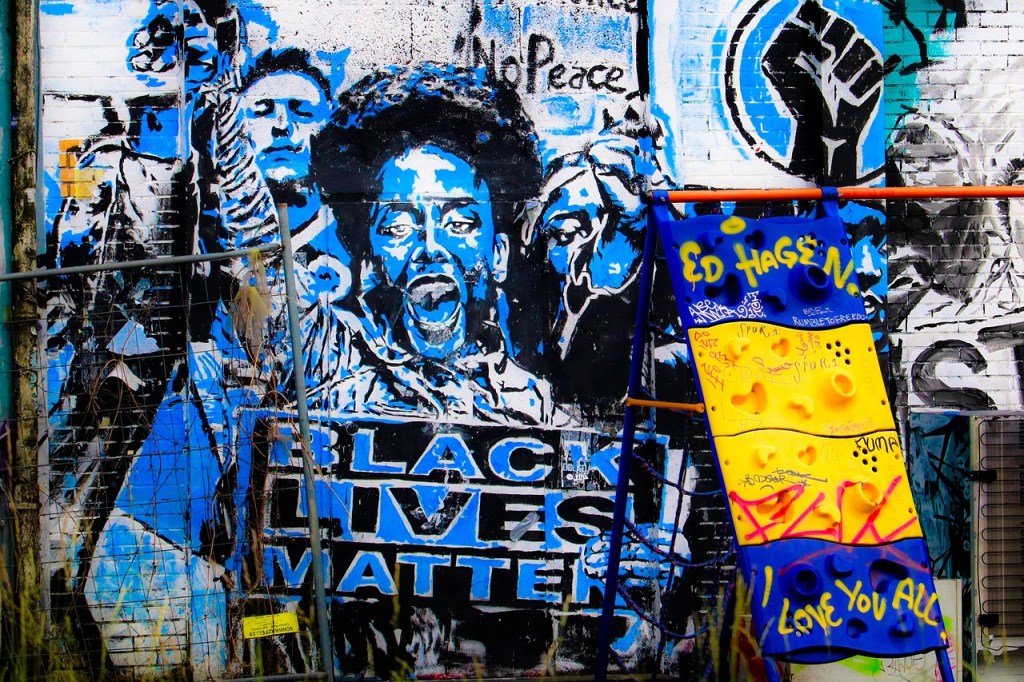
Given that the United States is currently reckoning with its disgusting abuses of power, destructive support for dictators, dehumanization of anyone who disagrees with its regime, and insatiable greed that fuels the worsening health and prosperity of its own citizens, it is important to see why activism needs to come from every artistic medium it can get its hands on… especially now that laws appear “open to interpretation,” leading us citizens to “unintentionally” break laws that were never laws in the first place… such as arrests for exercising 1st Amendment (Freedom of Speech) and even 2nd Amendment (Right to Bear Arms) rights―the heartbeats of American society. Rest in Peace Renee Good and Alex Pretti among dozens of others we cannot currently see.
As someone who understands both sides of the “Craftivism” argument, I have to admit that crafts are what keep me personally engaged with the current events of my time without the misery that comes with doom scrolling. Crafts connect me to other like-minded people, many of which who are far in their activism journeys. Their sense of justice and drive to see others do better is contagious. This energy prompts me among others to join in on civil disobedience.
Given the correlation between America’s MAGA and Neo-Nazi movements and the original Nazi movements of 1930s and 1940s Germany, many crafters have revived interest in historical knits and garments as a way to help us remember that although history does not repeat itself exactly, it sure does rhyme.
3 Historical Knits That Were Used To Fight Fascism
To maintain our own morale in the United States, I thought it would be appropriate to share some historical knits that were at one point punishable crimes because they represented opposition to fascism. Fascism is defined as far-right authoritarianism that stresses ultranationalist ideas, militarism, and violent suppression of opposing forces, all while being run by a dictatorial leader.
1. The H7 Monogram
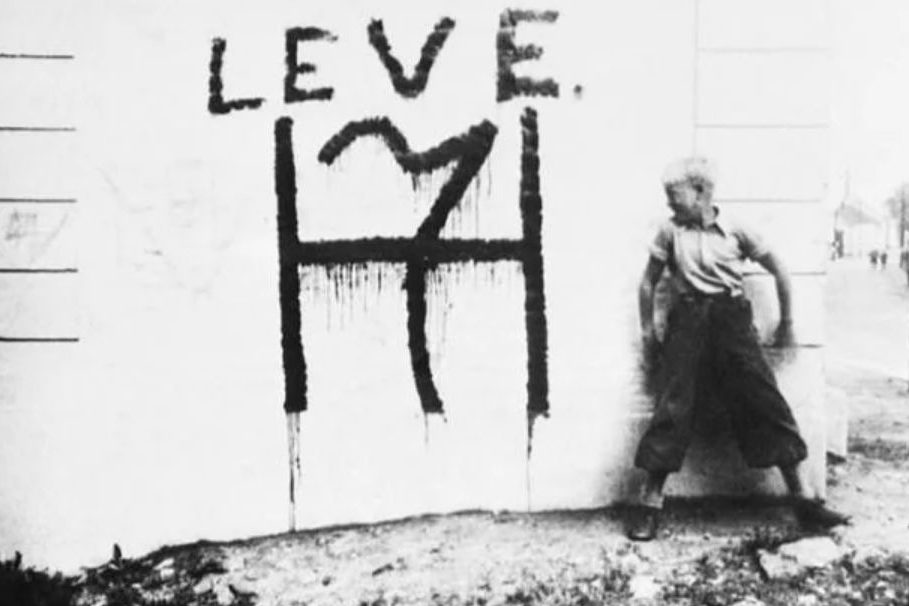
The H7 Monogram served as a national symbol that represented Norwegian loyalty to the exiled king during Nazi occupied Norway. It was used in all manner of goods, clothes, pins, and even graffiti. Of course, it was also used in knitwear.
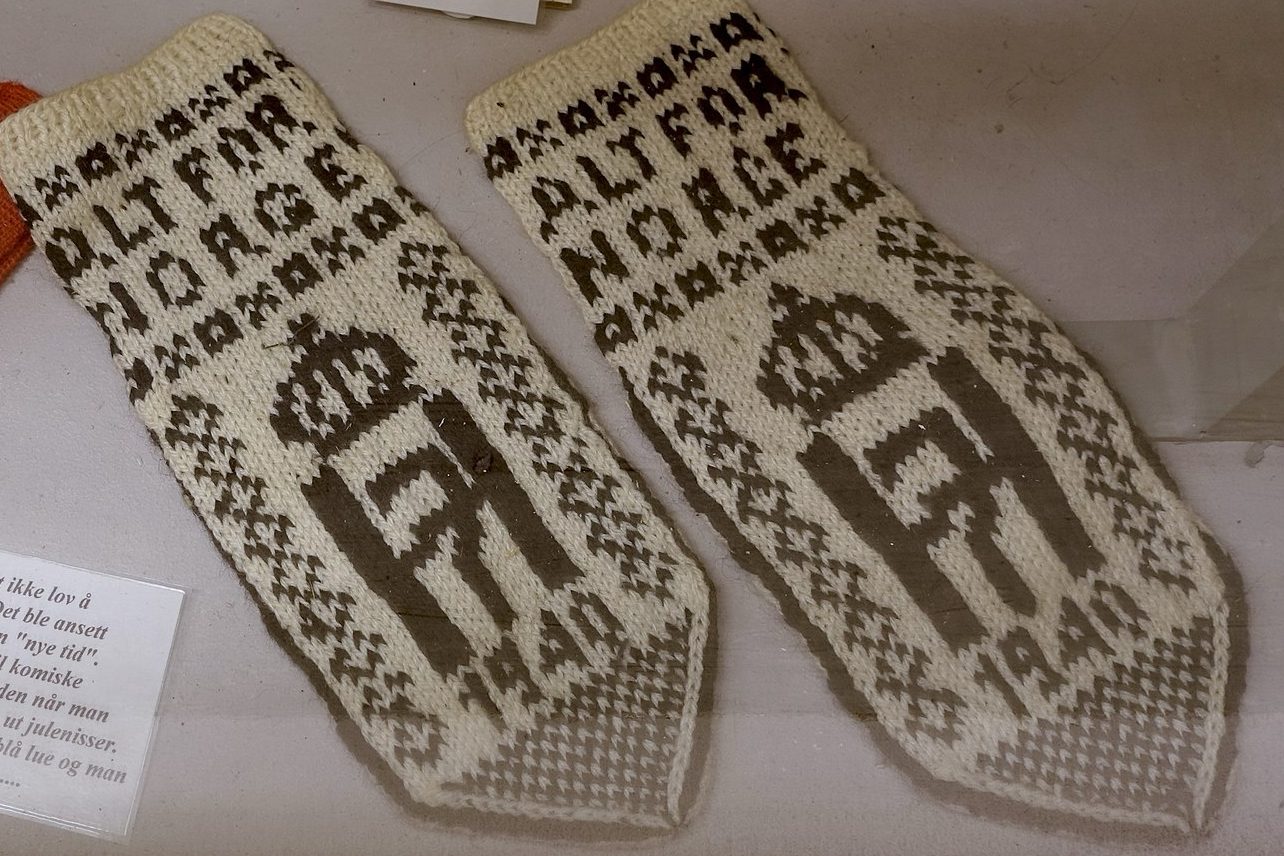
The traditional black and white knitted mittens featured the H7 monogram. This subtle yet open display of defiance aided in national morale by showing solidarity against German occupation. Anyone found with this symbol could be arrested and punished. Despite Nazi propaganda and violent crackdowns, Norwegians continued to wear their symbols.
This was significant because despite what we may assume today, King Haakon VII was not an absolute monarch. He was the country’s first constitutional king, which meant that he had a largely ceremonial role and was a staunch defender of Norway’s democratic constitution. He had a motto “All for Norway” which emphasized his dedication to the people of the nation instead of personal wealth and power. All of these were in direct opposition to the authoritarian philosophies of Nazi Germany.
2. The Royal Lion
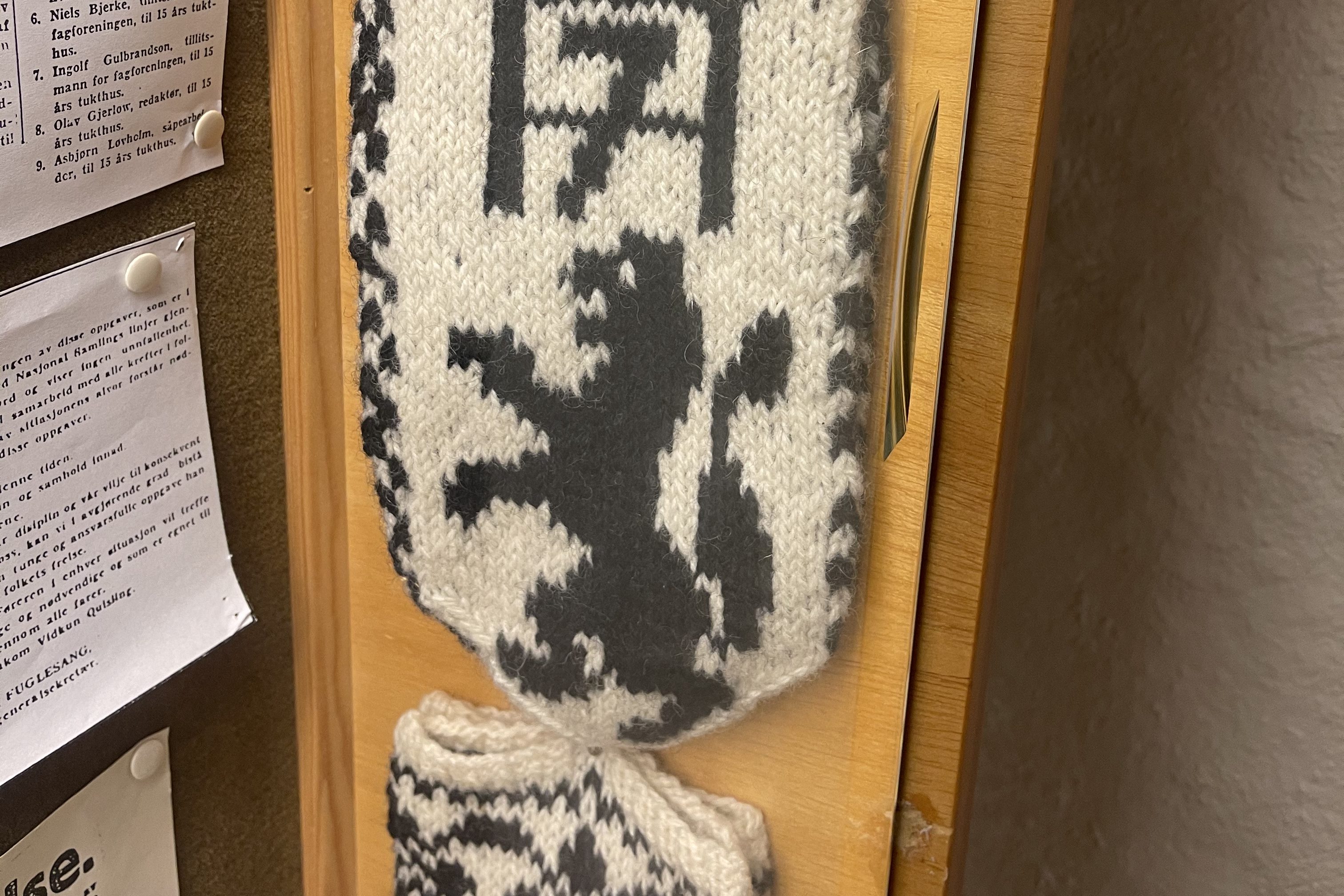
In addition to the H7 Monogram, the Royal Lion was used as a symbol of resistance. King Haakon VII and Crown Prince Olav refused to surrender to Nazi Germany. Upon their exile, Norwegian citizens continued to use the “lion” on stamps, uniforms, and knitwear, risking arrest and violence.
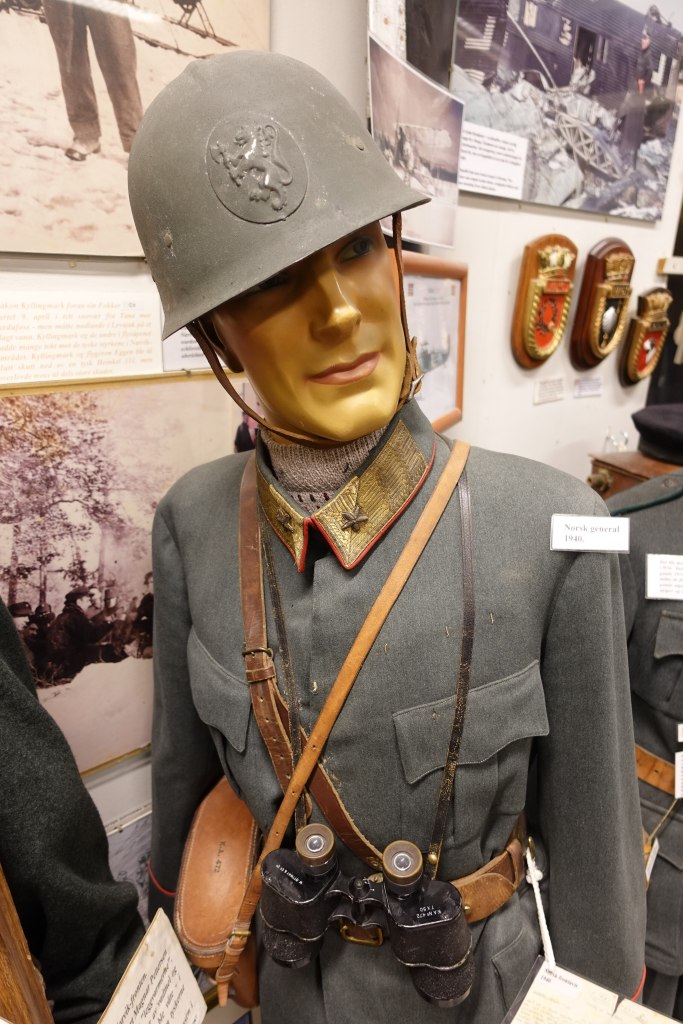
Not too many knits have survived, but there are still garments and uniforms around today flaunting the lion with its axe.
3. The Red Nisselue (Rød Topplue)
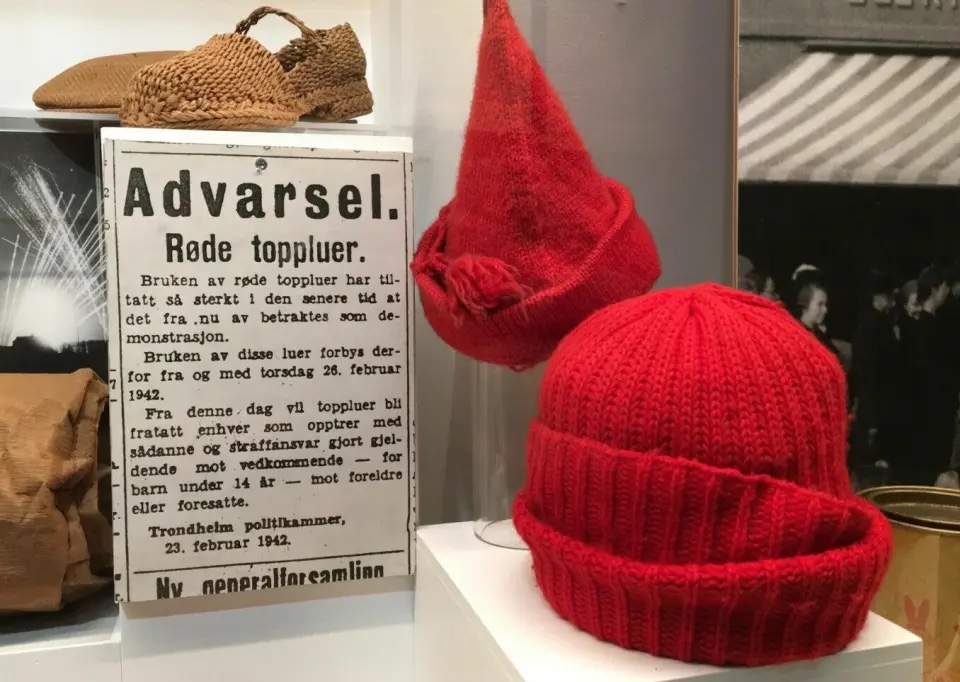
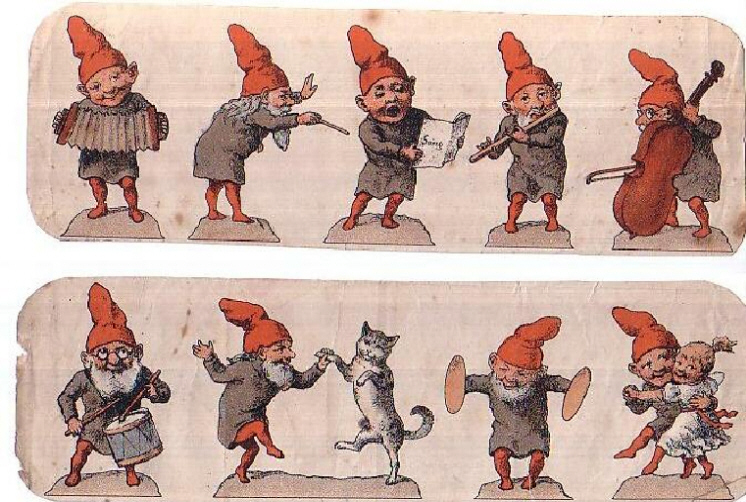
Of course, I cannot talk about resistance without featuring the Red Nisselue, which has been revived due to the brave Minnesotans resisting Immigration Customs Enforcement (ICE), US Boarder Patrol, and the Department of Homeland Security (DHS) in the United States. The Red Nisselu is a traditional red pointed wool cap based on the nisse—a household spirit that protects homes, farms, and livestock. They are similar in look to garden gnomes, but are far more than just a decoration.
The red hat became a national symbol of unity and quiet resistance alongside the H7 Monogram and Royal Lion. The hat became so prominent that the Nazis banned it on February 26th, 1942. It was illegal to wear, make, and distribute the hat, but, again, that did not stop everyone.
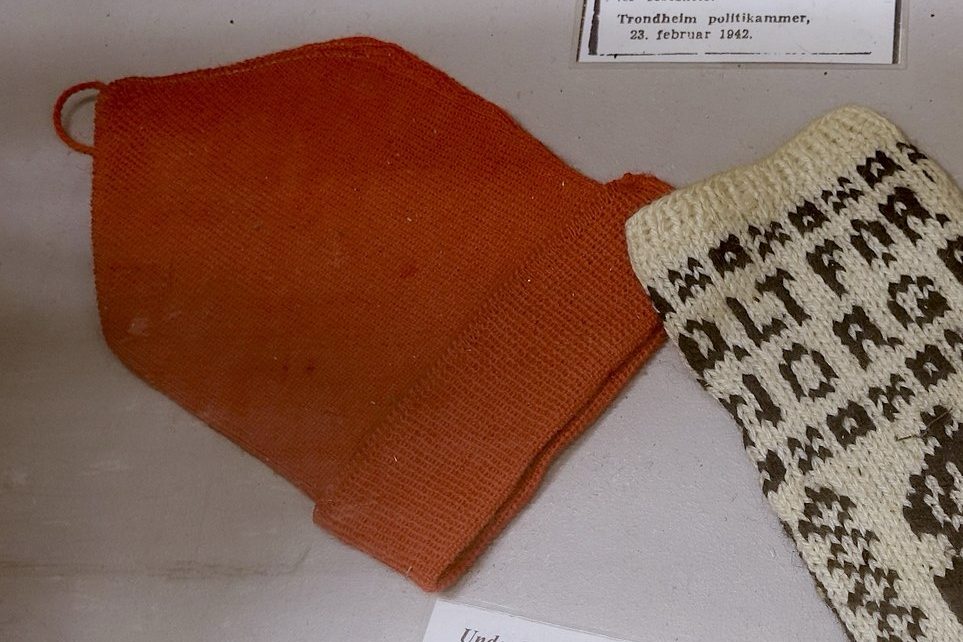
The hat has been revived in the United States due to the Minnesotan resistance against ICE. There happens to be a large Scandinavian population in Minnesota that appreciates the revival of this pivotal history. A reconstructed pattern is available on Ravelry by Paul S. Neary called the Melt the Ice Hat. A portion of the purchase goes to MIRAC – Minnesota Immigrant Rights Action Committee.
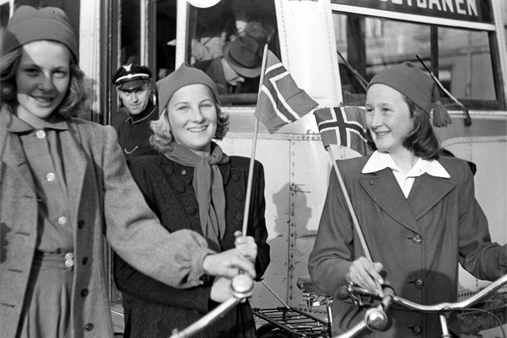
In Solidarity With Our Communities
It is heartwarming to see the Red Hat make a symbolic comeback during what is definitely a turning point in American History. The hat is not just a performative stunt; it has raised awareness of social injustice, provided funding to grass roots organizations, and connected people across cultures during what is clearly an attempt to destroy unity in one of the most diverse nations in the world.
If I or anyone else has ever unintentionally broken a law, then it was while exercising our Constitutional Rights. Otherwise, countries occasionally need a wakeup call through some good old fashioned civil disobedience.


 Cozy Crafting and Art
Leave a comment