“Remember that children, marriages, and flower gardens reflect the kind of care they get.” ― H. Jackson Brown Jr.
One of the proudest moments in my life was the day my precious little Looking Glass Begonia survived an entire year. I purchased it with a friend at a local brewery where a gardening festival was also taking place between sips of hoppy beer and sweet ale. I fell in love with its foil-like leaves with ribbons of sage, silver, and rose-gold woven throughout. It is still alive right now, reaching for sunlight every day, living peacefully between a sage brocade curtain and a stack of books.
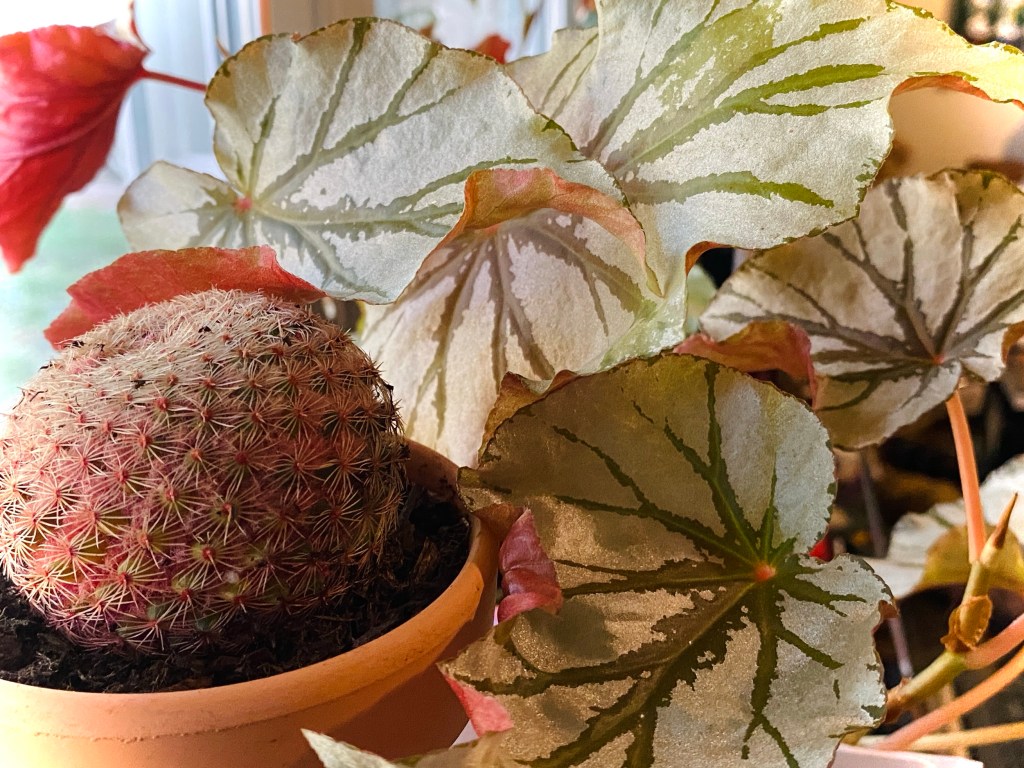
Ten years ago, I would have never imagined myself nursing an indoor plant, let alone cultivating a garden that would provide months of decadent herbs, beans, and fruit. Plants can make both divine and hellish companions, after all, able to provide both relief and suffering depending on how we interact with them. I was constantly accidentally murdering my plants when I decided not to give up on them. Fortunately, I ended up learning something interesting as my begonia continued looking toward the sky: it taught me to st0p seeing plants and animals as pets, and see them instead as people―individuals with varying love languages, attitudes, preferences, and needs. Plants are a different beast because they require you to be intimate with them in a way that does not use expressions or speech. I don’t even argue that they are necessarily conscious―but, they are living, nonetheless.

Not everything is dog. They are man’s best friend because they are incredibly human-like and easier for us to communicate with. They wag their tails (or entire booties) when ecstatic! They hug and cry and complain. They dream. Plants, however, operate on a deeper level―quite literally. Their roots are deep within the soil, interacting with the planet’s vibrations, trembling, and electrical currents. They can feel the dangers in the soil, react to sun and light, and remember threats from the past… not through our interpretation of mindful memory, but through their own unique senses and understanding without ears, eyes, and noses. They have over a dozen senses and communicate through fungal networks.
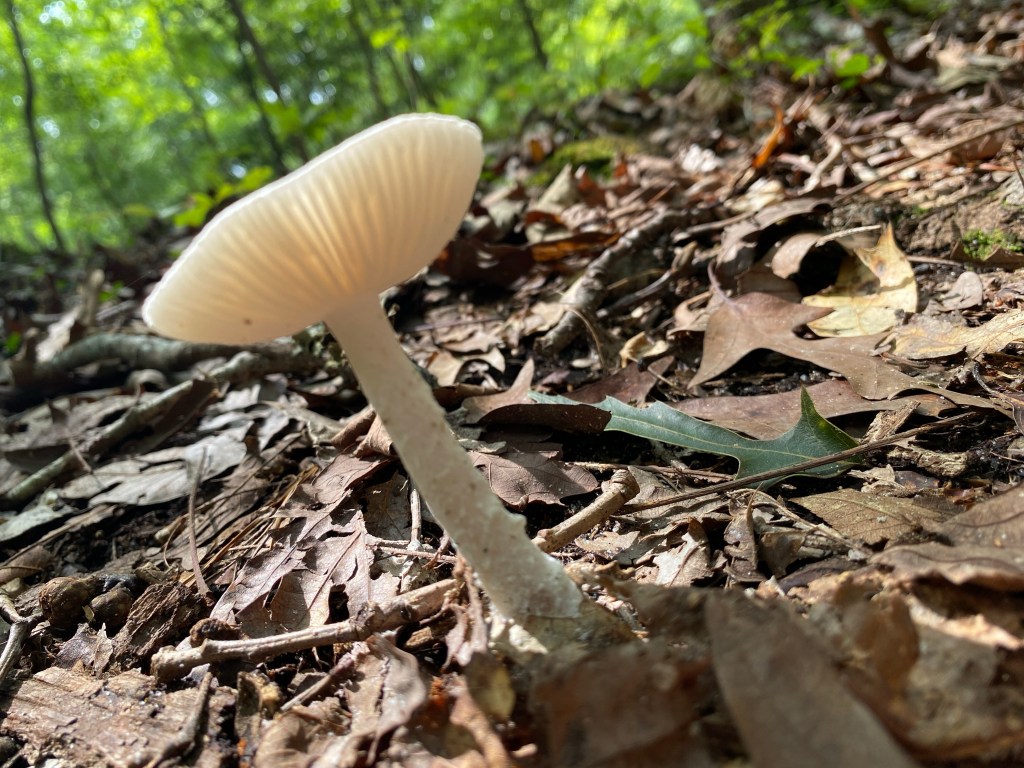
Our own senses are very different; however, plants can teach us to pay attention to our surroundings―something our modern and post-modern world has forced many of us to forget. A day of gardening, without a cellular device, AirPods, headphones, or any wire dangling by our necks, and you can grasp the remnants of a connection once as natural to us as breathing: the distinct twitter of over a dozen birds, the way the leaves shiver on a magnolia versus an oak, or how the cries of insects shift depending on the force of the wind. These senses provide the thrill of being alive.

I am still relearning my lost senses, however, it is incredible just how much music and color has been revealed by learning to care for this precious little plant. It has given me an appreciation for plants beyond just pretty things stationed at a window. I encourage you to find your plant-person―one you can love and care for, so that it, too, can help reveal what it feels like to be alive on Earth.


 Cozy Crafting and Art
Leave a comment